Lime Rock vs Crushed Concrete: Best Choice for Florida DrivewaysA project guide for Orlando, FL
A detailed comparison of two popular driveway base materials for Central Florida properties.
If you are building or resurfacing a driveway in Central Florida, one of the first decisions you will face is what base material to use. The two most common choices in this part of the state are lime rock and crushed concrete. Both are widely available, both work well in Florida's sandy soil conditions, and both come at reasonable price points. But they are not interchangeable, and choosing the wrong one for your situation can mean extra cost, poor drainage, or a surface that breaks down faster than it should.
This guide compares lime rock and crushed concrete across the factors that matter most for Florida driveways: cost, compaction, drainage, durability, appearance, and maintenance. Whether you are a homeowner planning a new driveway or a contractor quoting a residential project, this breakdown will help you make the right call.
What Is Lime Rock?
Lime rock, also called limestone base or limerock, is a naturally occurring sedimentary rock that is quarried extensively throughout Florida. It is one of the most widely used base materials in the state and has been a staple of Florida road construction for decades. The Florida Department of Transportation (FDOT) approves lime rock for use as a road base material, and it is the standard sub-base for most paved roads, parking lots, and commercial driveways in the region.
When crushed and graded, lime rock forms a dense, tightly packed surface that hardens over time, especially when exposed to moisture and compaction. The material naturally binds together as it settles, creating a semi-rigid surface that resists rutting and displacement. In Central Florida, lime rock is quarried locally, which keeps transportation costs relatively low compared to imported aggregates.
Lime rock comes in several grades. The most common for driveway use is a screened or graded product that contains a mix of fine particles and larger crushed pieces. This blend is what gives it strong compaction characteristics. You will sometimes hear it referred to by its FDOT specification number, with different grades suited for different load-bearing requirements.
What Is Crushed Concrete?
Crushed concrete is a recycled aggregate made from demolished concrete structures such as buildings, sidewalks, roads, and foundations. The concrete is processed through a crusher, screened to size, and sold as a base material. It is one of the most cost-effective driveway materials available in Central Florida, and its availability has increased as recycling operations have expanded across the state.
From an environmental standpoint, crushed concrete is a strong choice. It diverts construction waste from landfills and reduces the demand for newly quarried materials. For budget-conscious projects, it delivers solid performance at a lower price point than virgin lime rock. Many Central Florida recycling facilities produce crushed concrete in multiple size grades, from fine screenings to larger chunks suitable for road base.
Crushed concrete compacts well, though not quite as tightly as lime rock. The angular edges of the crushed pieces lock together when compacted, creating a stable surface. Over time, the cement dust in the material can re-harden slightly when exposed to moisture, which adds to its stability. It drains well and holds up under moderate traffic loads.
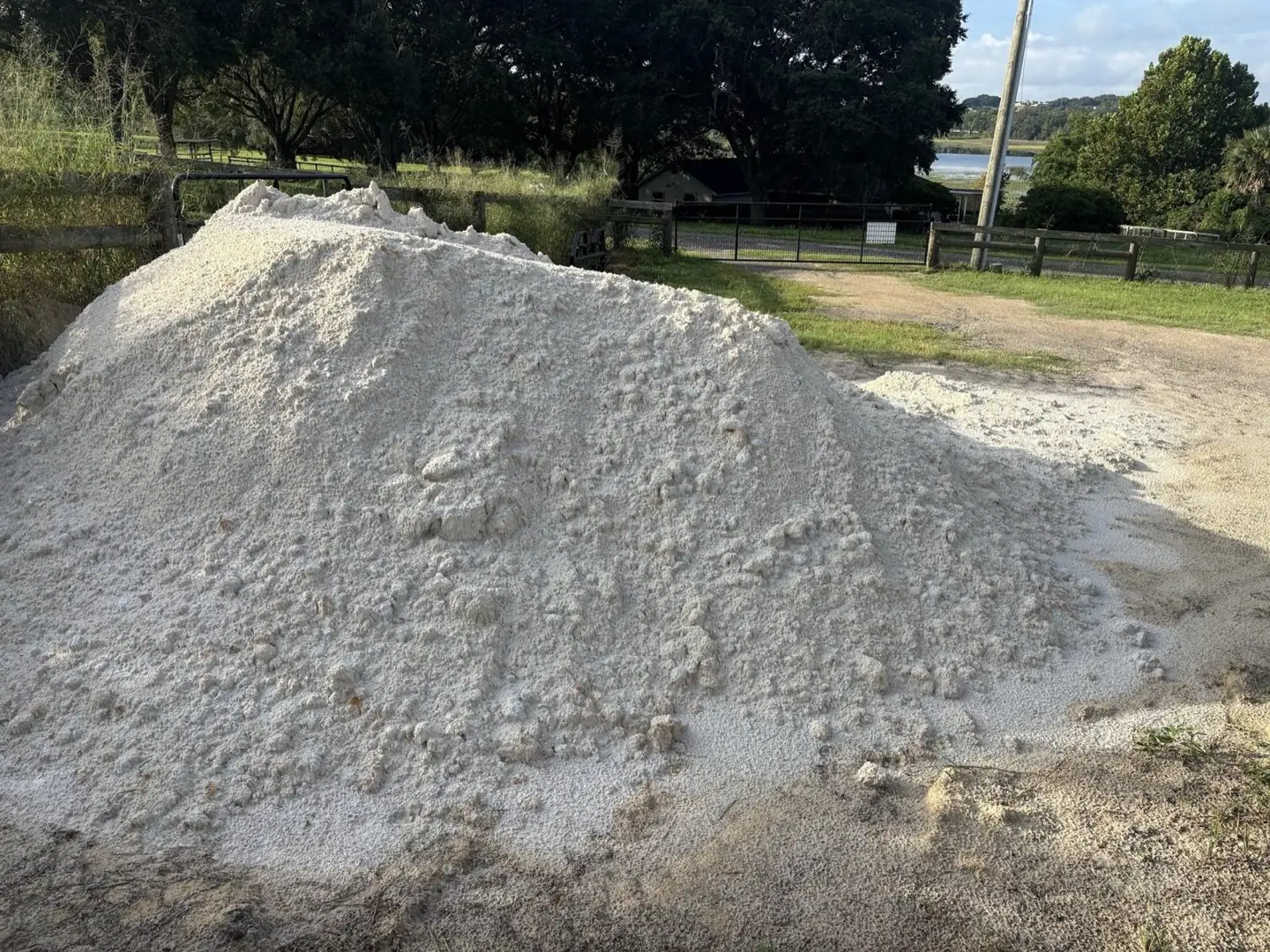
Lime Rock vs Crushed Concrete: Side-by-Side Comparison
Cost. Crushed concrete is generally less expensive than lime rock. In Central Florida, crushed concrete typically runs $15 to $25 per ton, while lime rock ranges from $20 to $35 per ton. Delivered pricing depends on distance and quantity, but for a standard residential driveway, crushed concrete will usually save you 20 to 30 percent compared to lime rock. That said, the cheapest option is not always the best long-term value, as we will discuss below.
Compaction. Lime rock has the edge here. Its natural binding properties allow it to compact into a very dense, almost cement-like surface over time. Crushed concrete compacts well but remains slightly more granular. For driveways that will see heavy traffic or commercial vehicles, lime rock provides a more durable compacted base. For standard residential use, crushed concrete compacts more than adequately.
Drainage. Both materials offer good drainage, which is critical in Central Florida where heavy afternoon rains are a daily occurrence during summer. Crushed concrete tends to be slightly more permeable than fully compacted lime rock, which can be an advantage in areas prone to standing water. Lime rock, once fully compacted, sheds water more effectively off the surface, which can be better or worse depending on your grading situation.
Durability. Lime rock wins on long-term durability. A properly installed and compacted lime rock driveway can last 15 to 25 years with minimal maintenance. Crushed concrete driveways typically last 10 to 15 years before needing a refresh layer. Lime rock also holds up better under heavy loads, which matters if you regularly park trucks, trailers, or heavy equipment on your driveway.
Appearance. Lime rock has a clean, uniform tan or off-white appearance that many homeowners prefer. Crushed concrete is more varied in color, typically gray with visible aggregate pieces, and can look rougher. Over time, lime rock tends to maintain its appearance better, while crushed concrete can develop a weathered look. For properties where curb appeal matters, lime rock is usually the preferred choice.
Maintenance. Both materials require periodic grading to address ruts and wash-outs, especially after heavy rain seasons. Lime rock generally needs less frequent maintenance because of its tighter compaction. Crushed concrete may need an annual top dressing of fresh material to maintain surface quality. Both benefit from proper initial grading with a slight crown to direct water runoff to the edges.
When to Choose Lime Rock
Lime rock is the better choice when you need maximum durability and load-bearing capacity. It is the standard material for FDOT road projects, commercial parking areas, and any application where the surface will see regular heavy vehicle traffic. If you are building a driveway that needs to support construction equipment, delivery trucks, or boat trailers, lime rock is the safer bet.
Lime rock is also the right call for projects where appearance matters. Its natural color and smooth compacted finish look clean and professional. Many HOA communities in Central Florida specify lime rock for unpaved driveways and access roads because of its consistent appearance.
For any project that requires an engineered base, such as a sub-base for asphalt or concrete paving, lime rock is almost always the specified material. Engineers and contractors trust its compaction characteristics and load-bearing properties. If your driveway will eventually be paved, starting with a lime rock base gives you the best foundation. Check our aggregate hauling page for more on the materials we move.
When to Choose Crushed Concrete
Crushed concrete is the practical choice for budget-conscious residential projects where maximum durability is not the primary concern. If you are building a driveway for a rural property, a secondary access road, a temporary construction entrance, or a parking area that will see light to moderate traffic, crushed concrete delivers solid performance at a lower cost.
It is also a strong choice for environmentally minded projects. Using recycled concrete keeps material out of landfills and reduces the environmental impact of quarrying new stone. Some green building certifications give credit for using recycled aggregates, which can matter for commercial projects seeking sustainability credentials.
For temporary roads and construction access, crushed concrete is often the default choice because of its lower cost and ready availability. Contractors building subdivisions frequently use crushed concrete for temporary access drives that will be removed or paved over once the project is complete. It does the job without overspending on material that will not be the finished surface.
Crushed concrete also works well for informal parking areas, farm roads, and utility access paths where a smooth finished appearance is not a priority. Its lower cost means you can cover more area for the same budget, which is often the deciding factor for larger rural properties.
Other Driveway Base Options in Central Florida
While lime rock and crushed concrete are the two most popular choices, Central Florida property owners have a few other options worth considering.
Shell rock is a natural material composed of crushed shells and limestone. It is common in coastal areas of Florida and has a distinctive white appearance. Shell rock compacts reasonably well and drains excellently, but it is softer than lime rock and wears down faster under heavy traffic. It works well for beach-area properties and low-traffic residential driveways where its appearance fits the aesthetic.
Asphalt millings are recycled material from old asphalt roads. They compact very tightly, especially in Florida's heat, where the residual asphalt binder softens and re-bonds. Millings create a dark, smooth surface that looks similar to a paved driveway. They are moderately priced, usually falling between crushed concrete and lime rock. The main drawback is that millings can soften in extreme heat and may track onto shoes and vehicles when fresh. You can explore all the materials we deliver to find the right fit for your project.
Get Lime Rock or Crushed Concrete Delivered
Alex and Family Trucking delivers lime rock, crushed concrete, and other driveway base materials across Central Florida. Whether you are a homeowner building a new driveway or a contractor working on a subdivision, we can get the right material to your site on schedule and at a competitive price.
We serve Orlando, Kissimmee, Sanford, Winter Haven, Lakeland, Daytona, and the surrounding Central Florida area. Our drivers know the local quarries and recycling facilities, and we will help you source the best material for your project and budget.
Call us at (321) 947-9535 or request a quote online to get driveway material delivered to your Central Florida project.
Need Driveway Materials Delivered?
Contact Alex and Family Trucking for lime rock, crushed concrete, and aggregate delivery across Central Florida.