How to Choose the Right Base Material for Roads and Driveways in FloridaA project guide for Orlando, FL
A contractor's guide to lime rock, crushed concrete, shell rock, and other base options for Florida projects.
Every road, driveway, and parking area in Florida starts with the base layer underneath. Get the base material wrong, and you end up with rutting, washouts, and expensive repairs within a year. Get it right, and you have a surface that holds up under heavy loads, drains properly, and lasts for decades. Florida's sandy soils, high water table, and intense seasonal rainfall create demands that base materials in other states never face.
Here is a breakdown of the most common base materials used in Florida, what each one does best, and where each falls short.
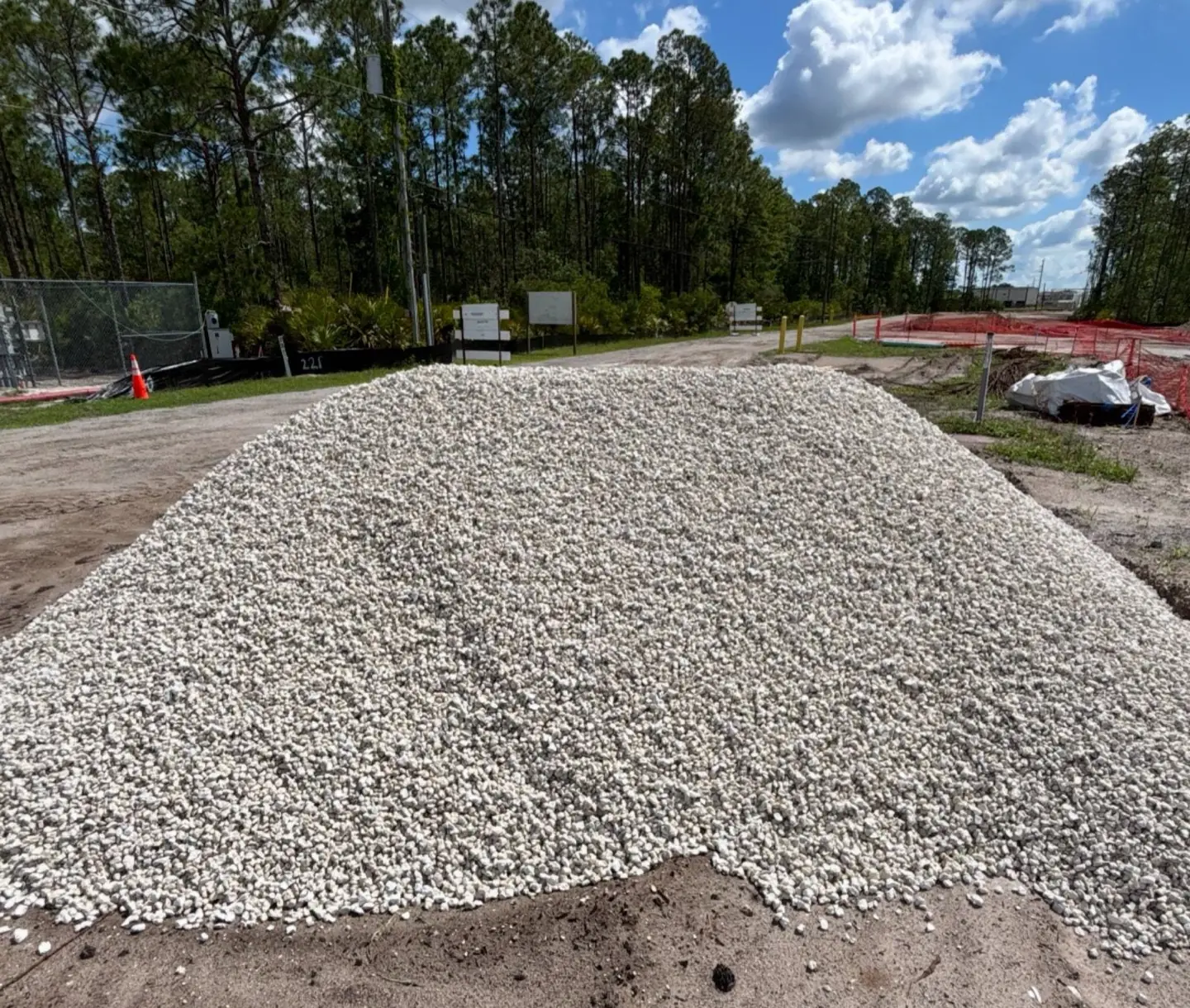
Lime Rock — Florida's Go-To Base Material
Lime rock is the standard base material for road construction and heavy-duty driveways across Florida. It is FDOT-approved, meaning it meets the Florida Department of Transportation's specifications for road base under highways, county roads, and municipal streets. When contractors talk about "road base" in Florida, they are almost always talking about lime rock.
What makes lime rock effective is its ability to compact into an extremely dense, almost cement-like surface. When properly graded and compacted with moisture, lime rock particles lock together and harden over time, creating a base layer with excellent load-bearing capacity that supports everything from residential traffic to fully loaded dump trucks. It resists rutting and maintains structural integrity even during wet conditions.
Lime rock is the best choice for commercial driveways, DOT road projects, subdivision roads, and any application where structural performance is non-negotiable. The tradeoff is cost — lime rock runs more per ton than recycled alternatives. But for FDOT compliance or maximum durability, it is worth every dollar. We deliver lime rock and other construction materials throughout Central Florida.
Crushed Concrete — Recycled, Cost-Effective, and Reliable
Crushed concrete is one of the most popular base materials in Central Florida, especially for residential and light commercial projects. It is made from demolished concrete structures that get processed through a crusher and screened to size. The result is a recycled aggregate that compacts well, drains effectively, and costs significantly less than virgin lime rock.
One of crushed concrete's biggest advantages is its self-cementing property. Residual cement in the material reactivates when exposed to moisture, meaning the base gradually hardens after compaction. It drains better than lime rock in most cases, which helps in areas with high water tables. Crushed concrete works well for residential driveways, temporary roads, parking areas, and budget-conscious projects. The main limitation is that it is not FDOT-approved for public road base.
Shell Rock — A Natural Florida Base Material
Shell rock is a natural material mined in Florida, composed of compacted seashells and limestone fragments. It has been used as a base and surface material for generations, particularly in rural areas, agricultural properties, and coastal communities where it is locally abundant. It provides decent drainage and compacts reasonably well, creating a firm surface for light to moderate traffic.
The downside is that shell rock does not match the structural strength of lime rock or crushed concrete. Under heavy, repeated loads it breaks down faster and requires more frequent maintenance. It is best suited for residential driveways with normal car traffic, agricultural access roads, and rural properties.
#57 Stone — The Essential Drainage Layer
#57 stone is a clean, washed aggregate that ranges from about half an inch to one and a half inches in diameter. It is not a standalone base material — you would not grade and compact #57 stone as your primary driving surface. Instead, #57 stone serves as a critical drainage layer beneath concrete slabs, asphalt, and other finished surfaces.
In Florida, where the water table is high and rainfall is heavy, proper sub-base drainage can make or break a project. A layer of #57 stone beneath your base material allows water to flow freely away from the structural layers above. This prevents hydrostatic pressure from building up under slabs, reduces the risk of base material washout, and extends the life of whatever surface sits on top. Contractors building concrete driveways, commercial slabs, or asphalt parking lots in Central Florida should always consider a #57 stone drainage layer as part of their base design. Learn more about our aggregate hauling services.
Asphalt Millings — Reclaimed and Heat-Activated
Asphalt millings are the material left over when old asphalt pavement is ground up during road resurfacing. The product looks like coarse, dark gravel and contains both aggregate and residual asphalt binder. What makes millings unique in Florida is how they respond to heat — during summer months, the residual asphalt softens in the sun and re-bonds when compacted, creating a semi-solid surface that mimics fresh asphalt at a fraction of the cost.
Millings work well for driveways, private roads, and parking lots where a dark, asphalt-like appearance is desired. They compact well, resist erosion better than loose gravel, and provide a smooth driving surface. The limitation is consistency — quality varies batch to batch — and they are not FDOT-approved. But for private driveways and non-regulated parking areas, asphalt millings deliver strong value.
How Florida's Climate Affects Base Material Choice
Florida's climate is a major factor in every base material decision. The state receives an average of 50 to 60 inches of rain per year, with most of it concentrated in intense afternoon storms during the summer. This means your base material needs to either shed water quickly or remain stable when saturated. Sandy native soils drain well but offer no support, so the base layer has to provide both structure and water management.
The high water table in much of Central Florida — sometimes just a few feet below the surface — means that sub-base drainage is not optional. Materials like #57 stone become essential in low-lying areas. Florida's heat works in favor of materials like asphalt millings that re-bond under high temperatures, but it also means that fill dirt and base materials can dry out quickly during compaction, requiring careful moisture control to achieve proper density.
How to Order Base Material in Central Florida
Choosing the right base material is step one. Getting it delivered on time and in the right quantity is step two. At Alex and Family Trucking, we haul lime rock, crushed concrete, shell rock, #57 stone, asphalt millings, and other base materials to job sites across Orlando, Kissimmee, Sanford, Winter Haven, Lakeland, Daytona, and the Tampa corridor.
Whether you need a single tri-axle load for a residential driveway or multiple loads per day for a commercial road project, we have the trucks and the schedule flexibility to keep your project moving. Call (321) 947-9535 or request a quote to get pricing on base material delivery to your site.
Related Articles
Need Base Material Delivered to Your Job Site?
Alex and Family Trucking delivers lime rock, crushed concrete, shell rock, and more across Central Florida. Get a fast quote today.